Final remaining spaces on the 3–4 Oct weekend cohort

Nose Filler Injection Points: Safe Techniques for Non-Surgical Rhinoplasty

Who This Is For

Not sure if you’re eligible? Speak with our team. We’ll guide you through the requirements and next steps.

Table of Contents

Understanding Nose Filler Injection Points in Non-Surgical Rhinoplasty

Non-surgical rhinoplasty has become a highly requested procedure in modern aesthetic practice, particularly among patients seeking refinement without surgical downtime. For medical professionals entering aesthetics, the nose is one of the most technically demanding treatment areas due to its complex vascular network and layered anatomy.

As a trainer at Dr. Dray Academy, I always emphasise that success in nasal filler work starts long before the needle touches the skin. It begins with understanding exact injection point mapping, depth control, and vascular awareness.

Nose filler injection points refer to specific anatomical landmarks where hyaluronic acid is carefully placed to reshape and enhance nasal structure. These include the radix, dorsum, tip, columella, and piriform fossa. Each point carries its own purpose, risk profile, and technique requirement.

For clinicians looking to build a strong foundation in facial aesthetics, this is where structured education becomes essential. You can explore how this fits into broader facial contouring techniques through our guide on dermal filler training in London.
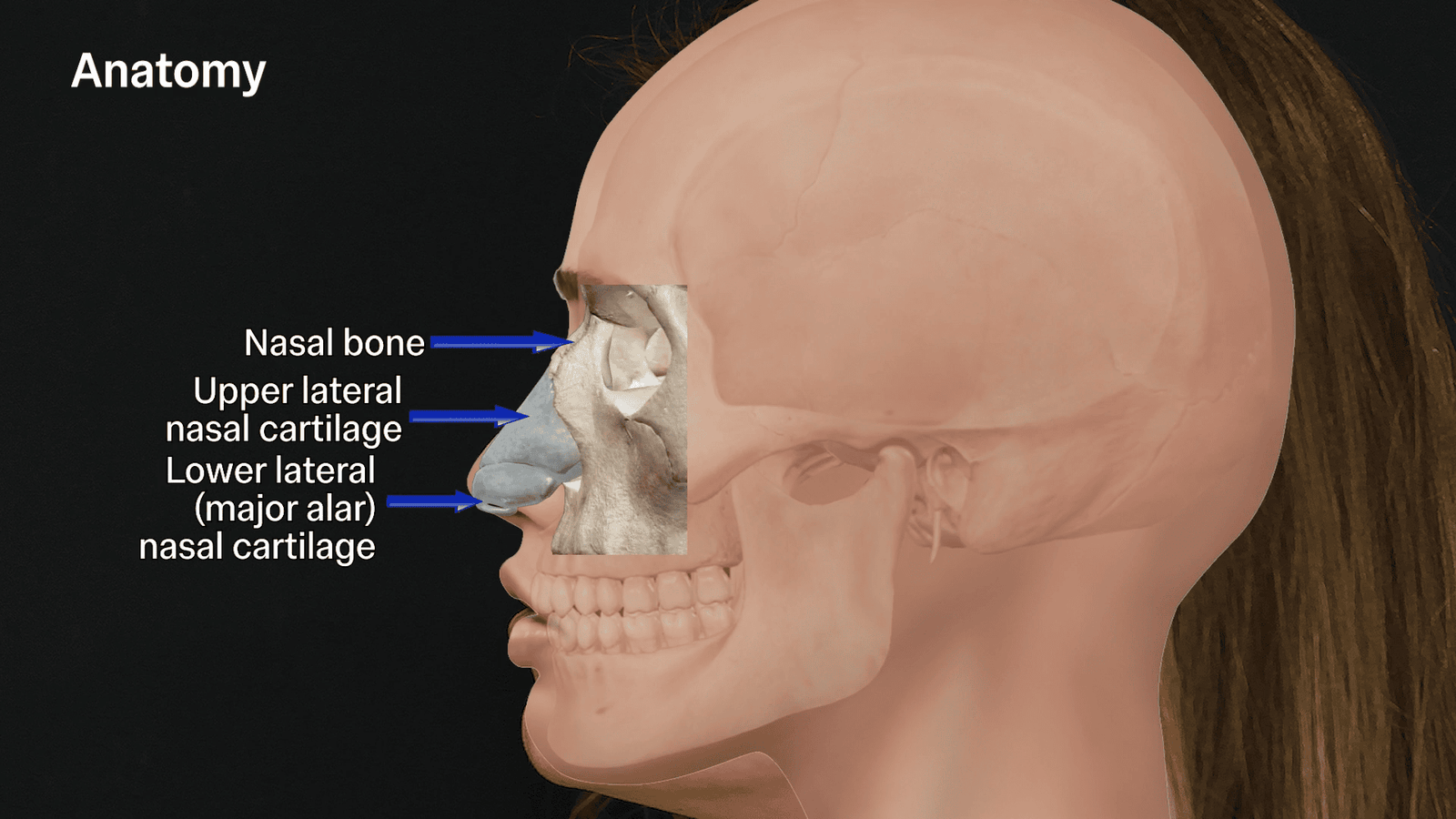
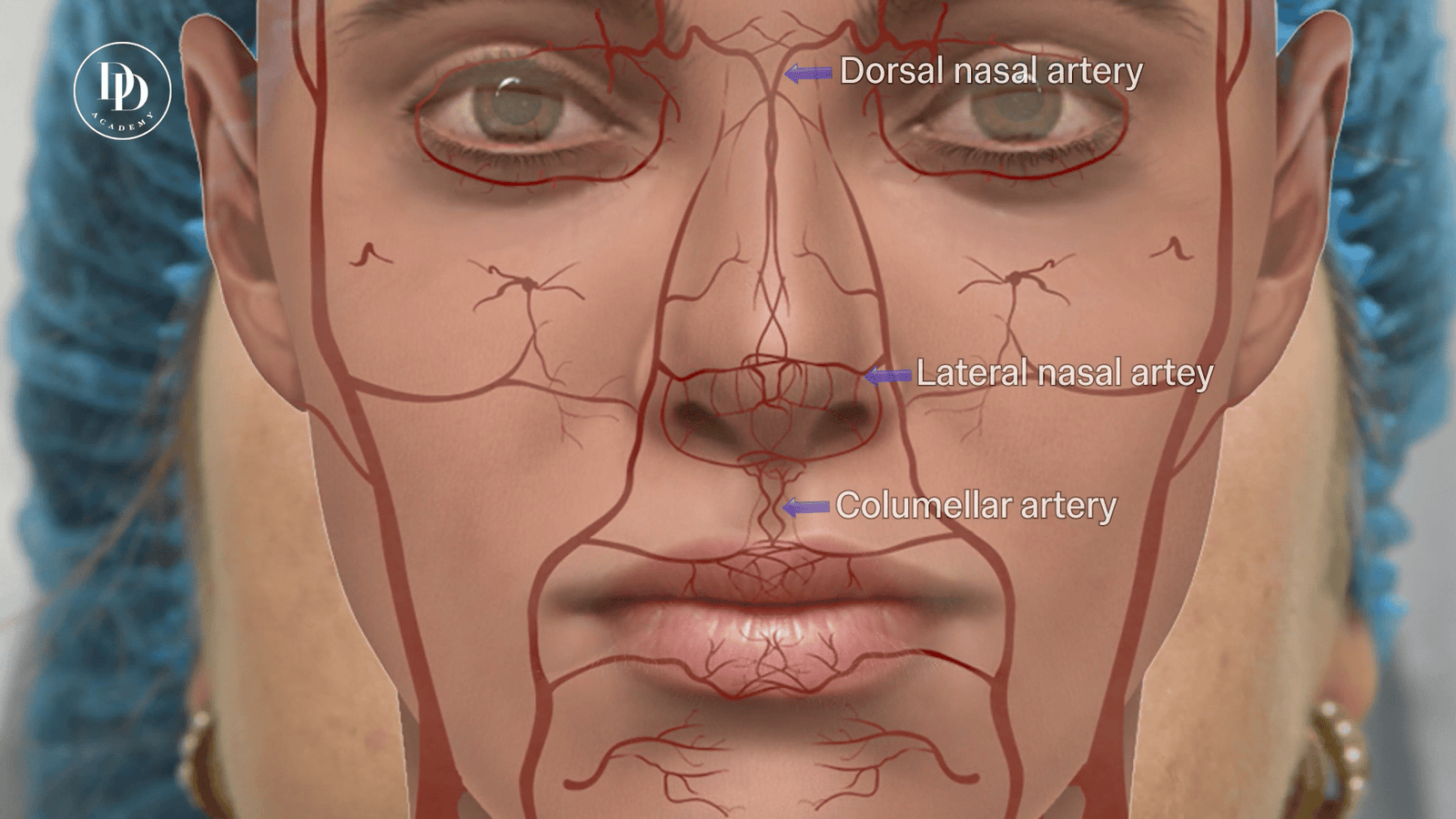
Clinical Anatomy of the Nose for Filler Injection

Understanding nasal anatomy is non-negotiable before performing any non-surgical rhinoplasty procedure.

The external nose is divided into three structural zones: the bony upper third, cartilaginous middle third, and lower tip complex. Each region differs significantly in tissue thickness, vascular density, and filler behaviour.

The nasal tip in particular has very thin soft tissue coverage (2–3mm), making it one of the highest-risk areas for vascular compromise if depth and placement are not controlled precisely.

At Dr. Dray Academy, we train practitioners to think in layers—not just injection points—so that safety and aesthetics are balanced in every treatment decision.

nasal anatomy injection zones for non-surgical rhinoplasty

Why Train with Dr Dray Academy

At Dr Dray Academy, our training is designed to go beyond basic techniques — focusing on the clinical judgement, precision, and full-face understanding required to deliver natural, high-level results.

Our approach is built on over 45 years of experience treating some of the world’s most discerning patients, and these techniques are practiced daily across our London, Paris, and Abu Dhabi clinics.

Internal Nasal Structures and Clinical Considerations

While fillers are placed externally, understanding deeper nasal structures is critical for safe practice.

The nasal cavity contains the septum, conchae, and mucosal lining, all of which play essential roles in airway function. The septum provides midline structural support, while the conchae regulate airflow and humidification.

Any significant septal deviation should always be assessed before aesthetic intervention. Functional concerns must be identified early in consultation and referred appropriately when needed.

This clinical differentiation between aesthetic and functional concerns is a core principle in advanced aesthetic medicine training.


Core Nose Filler Injection Points and Technique Mapping

In clinical practice, non-surgical rhinoplasty is structured around five key injection zones: radix, dorsum, nasal tip, columella, and piriform fossa.

The radix is used to improve the nasofrontal angle through deep supraperiosteal placement.

The dorsum requires a different approach depending on the anatomical level being treated. In the bony dorsum, filler is typically placed as precise supraperiosteal boluses to support and reshape the bridge, helping to camouflage dorsal humps, improve projection, and create a straighter nasal profile.

In the cartilaginous dorsum, the approach is usually more delicate. Here, carefully placed superficial microdroplets may be used to refine contour, smooth irregularities, and blend the transition between different parts of the nose. By adapting the depth, volume, and technique to the specific region of the dorsum, the nose can be reshaped in a controlled, elegant, and anatomically safe way.

The nasal tip requires extreme precision due to high vascular density and thin soft tissue, while the columella plays a key role in projection and rotation adjustment.

The piriform fossa is often overlooked but provides structural support to the nasal base and contributes to overall facial balance.

Device selection also matters: needles are preferred for deep precision work, while cannulas are used to reduce vascular risk.

internal nasal cavity anatomy relevant to filler safety

Non-Surgical Rhinoplasty Treatment Targets: Radix, Dorsum and Nasal Contour

In this preview, Dr Maurice Dray explains the key treatment targets in non-surgical rhinoplasty, including the radix, bony dorsum and cartilaginous dorsum. He discusses how precise filler placement can be used to influence nasal shape — from lifting the radix and visually lengthening the nose, to making the bridge appear slimmer, camouflaging a dorsal hump, and refining the overall nasal contour.

The full training explores how different areas of the nose require different depths, techniques and safety considerations, helping practitioners understand how to plan elegant, natural-looking nose reshaping with dermal filler.

Frequently Asked Questions

Become an Elite Aesthetic Practitioner

Get expert insights on aesthetic training, clinical techniques, and how to build a high-level practice. Join our private list for updates on upcoming training dates and opportunities.

Picture of Dr Dray Academy

Dr Dray Academy

Dr Dray Academy is a professional training platform dedicated to providing high-quality education in aesthetics and healthcare treatments. The content published is carefully created and reviewed to ensure accuracy, clarity, and real-world applicability.

Our team focuses on delivering expert guidance, training insights, and up-to-date industry knowledge to help students and professionals succeed in their careers. Each article is designed to be informative, trustworthy, and aligned with the latest standards in the field.

Discover our award winning Aesthetic Training in London here!

Related Blogs