[dda_bar]

How To Massage Lips After Filler: A Clinical Guide For Practitioners

Who This Is For

Not sure if you’re eligible? Speak with our team. We’ll guide you through the requirements and next steps.

Table of Contents

Understanding Lip Filler Massage And Clinical Aftercare

Lip filler aftercare is one of the most misunderstood aspects of aesthetic medicine. While social media often promotes aggressive massage techniques or “DIY correction” methods, experienced injectors understand that massage is a selective clinical tool requiring anatomical knowledge, product understanding, and appropriate timing. For healthcare professionals entering aesthetics, learning when not to massage is often just as important as learning the technique itself.

In clinical practice, post-treatment irregularities can occur even with excellent injection technique. Mild swelling, soft filler deposits, and temporary asymmetry are common during the inflammatory phase after treatment. The key is understanding which presentations will self-resolve and which benefit from professional intervention. This is why many practitioners progressing through advanced dermal filler training focus heavily on palpation, complication recognition, and refinement techniques rather than simply learning injection patterns.

At London School of Aesthetic Medicine, practitioners are taught to approach lip filler aftercare through a structured, anatomy-led framework designed for safe, premium-level outcomes.
Quick Answer: Should You Massage Lips After Lip Filler?

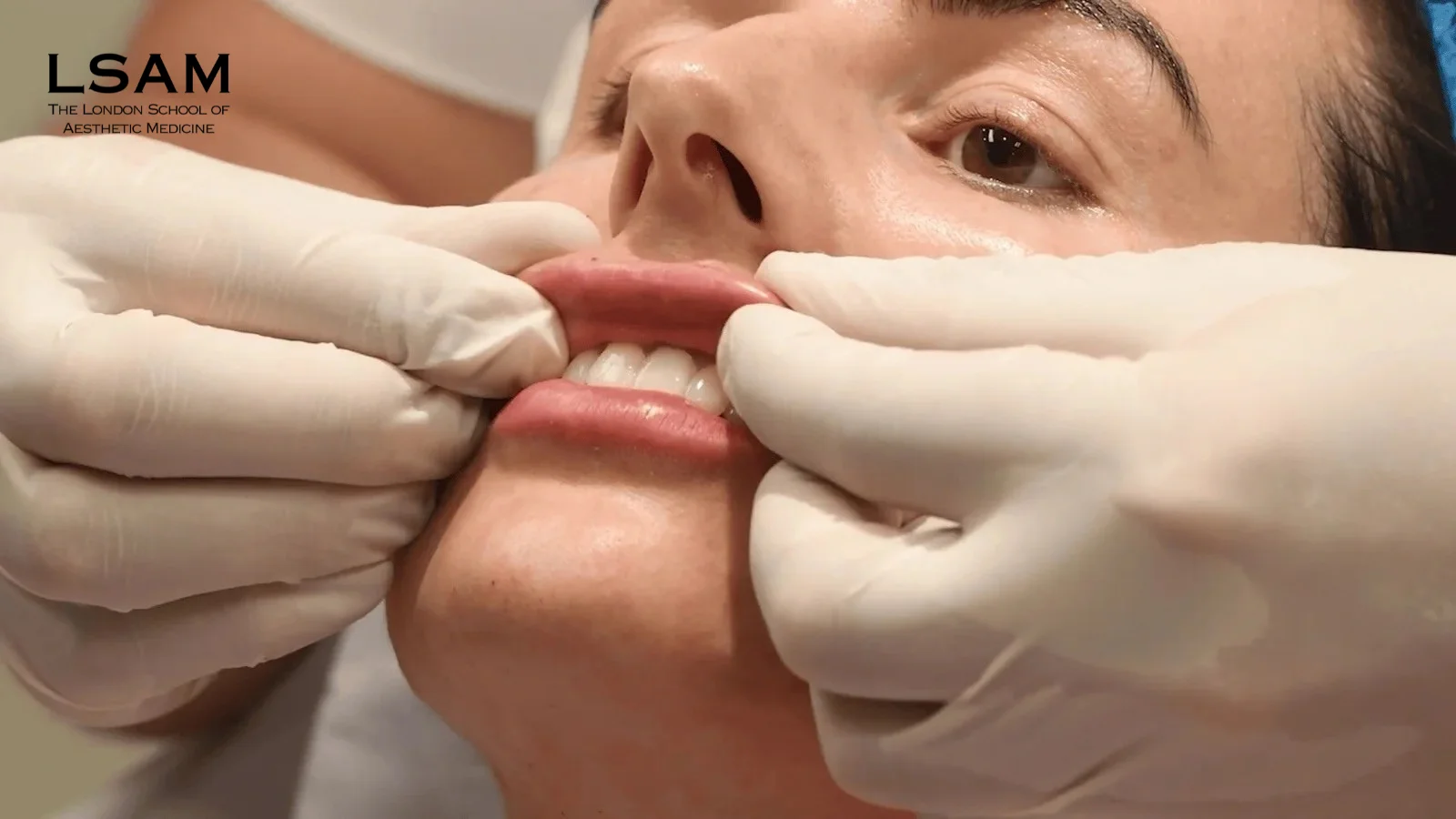
Lip filler massage may be appropriate in selected cases, but routine or aggressive massage should never form part of standard aftercare advice. Clinical judgement is essential. Some injectors use gentle massage immediately after treatment to refine contour, smooth minor irregularities, or distribute superficial filler more evenly within the vermilion.

Massage may be appropriate when addressing:

  • Soft early filler deposits
  • Minor asymmetry immediately after injection
  • Small palpable irregularities detected during treatment

Massage should be avoided if there are signs of vascular compromise, significant pain, active infection, or delayed inflammatory reactions. In these situations, inappropriate pressure can worsen complications or delay diagnosis.

One of the biggest mistakes inexperienced practitioners make is encouraging patients to self-manage lumps without proper assessment. At London School of Aesthetic Medicine, clinicians are trained to differentiate between swelling, oedema, bruising, filler placement irregularities, and true nodules before considering manual manipulation.

For practitioners developing confidence in aesthetic medicine, lip filler massage should be viewed as a refinement skill, not a replacement for excellent injection technique.

aesthetic practitioner assessing lip filler lumps before massage treatment Profhilo facial BAP injection points and anatomical mapping diagram

Why Train with London School of Aesthetic Medicine

At London School of Aesthetic Medicine, our training is designed to go beyond basic techniques — focusing on the clinical judgement, precision, and full-face understanding required to deliver natural, high-level results.

Our approach is built on over 45 years of experience treating some of the world’s most discerning patients, and these techniques are practiced daily across our London, Paris, and Abu Dhabi clinics.

Understanding Lip Filler Lumps And When Massage Is Appropriate

Not all lumps after lip filler treatment require intervention. Many irregularities seen within the first few days are related to swelling, localised trauma, or temporary oedema rather than misplaced product. Understanding the underlying cause is critical before applying pressure to the treated area.

Soft, mobile filler deposits may respond well to gentle directional massage when identified early. However, firm nodules, delayed inflammatory reactions, or lumps associated with redness and heat often require medical assessment rather than mechanical manipulation.

Product selection also influences the likelihood of palpable irregularities. Softer hyaluronic acid fillers typically integrate more smoothly into lip tissue, while higher G-prime products may create firmer structure and require greater technical precision during placement.

Practitioners should also understand that first-time lip filler patients often experience more noticeable swelling due to tissue expansion and inflammatory response. This can create unnecessary concern if appropriate aftercare counselling is not provided.

At London School of Aesthetic Medicine, clinicians are trained to evaluate filler behaviour through tactile assessment, anatomical understanding, and complication recognition protocols that support safer long-term outcomes.

stages of swelling and healing after hyaluronic acid lip filler injections

Lip Filler Aftercare And Massage Techniques For Practitioners

Frequently Asked Questions

Become an Elite Aesthetic Practitioner

Get expert insights on aesthetic training, clinical techniques, and how to build a high-level practice. Join our private list for updates on upcoming training dates and opportunities.

Picture of London School of Aesthetic Medicine

London School of Aesthetic Medicine

The London School of Aesthetic Medicine is a professional training platform dedicated to providing high-quality education in aesthetics and healthcare treatments. The content published is carefully created and reviewed to ensure accuracy, clarity, and real-world applicability.

Our team focuses on delivering expert guidance, training insights, and up-to-date industry knowledge to help students and professionals succeed in their careers. Each article is designed to be informative, trustworthy, and aligned with the latest standards in the field.

Discover our award winning Aesthetic Training in London here!

Related Blogs