Final remaining spaces on the 3–4 Oct weekend cohort

Chin Botox Injection Points: A Practical Guide for Aesthetic Practitioners

Who This Is For

Not sure if you’re eligible? Speak with our team. We’ll guide you through the requirements and next steps.

Table of Contents

Chin botox injection points are a core part of lower face rejuvenation, yet they remain one of the most technically underestimated areas in aesthetic practice. The challenge is not simply knowing where to inject, but understanding how the mentalis muscle interacts with the entire perioral complex and how small adjustments can significantly affect facial harmony.

For practitioners entering or refining their skills in aesthetic medicine, the chin is where anatomy, function, and aesthetics intersect. This is where precision matters — not just for aesthetic outcome, but for preserving speech, lip competence, and natural expression.

At Dr. Dray Academy, we approach chin botox as part of a full lower face assessment rather than an isolated treatment zone. You can explore our structured clinical pathway through Aesthetic Training London, where lower face botulinum toxin techniques are taught in a supervised, hands-on environment.

This guide is designed to give you a practical, anatomy-led understanding of chin botox injection points so you can apply them safely and confidently in clinical practice.
Understanding Chin Anatomy Before Injection

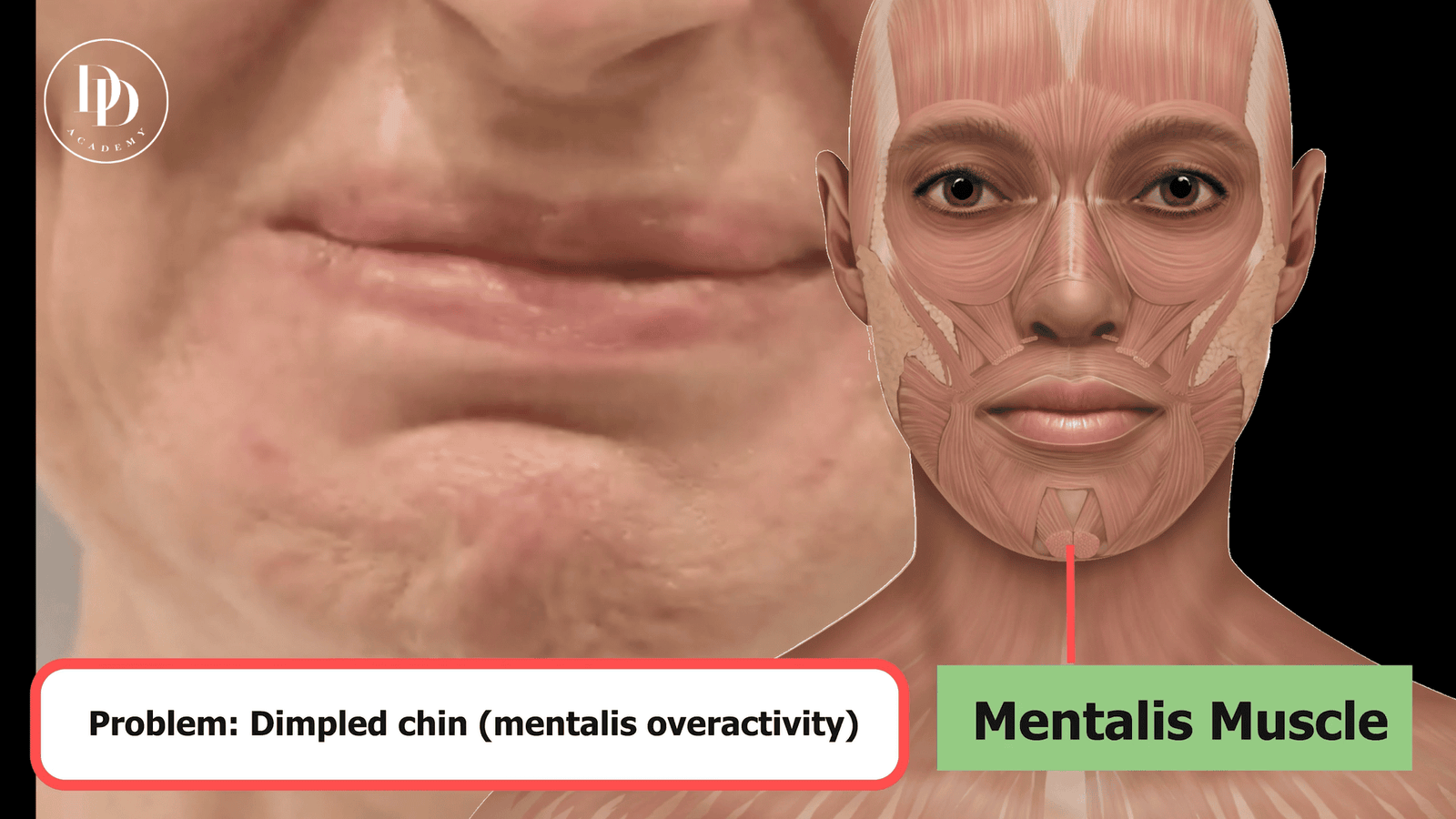
Before placing any botulinum toxin in the chin, the mentalis muscle must be properly understood in both static and dynamic function. The mentalis originates from the incisive fossa of the mandible and inserts into the skin of the chin, playing a key role in lower lip elevation and chin wrinkling.

Clinically, what you see as “chin dimpling” or “orange peel texture” is often a direct result of mentalis hyperactivity. However, this does not occur in isolation — it is influenced by surrounding muscles including the depressor labii inferioris (DLI), depressor anguli oris (DAO), and platysma.

Understanding these relationships is what separates a technician from a practitioner. The chin should always be assessed dynamically — during rest, speech, smiling, and pouting — before deciding on injection placement.

Equally important is awareness of the mental foramen, typically located 10–15 mm lateral to the midline, which houses the mental nerve and vessels. Respecting this anatomical landmark is essential to avoid complications and ensure safe toxin placement.


Clinical Mapping of Chin Botox Injection Points

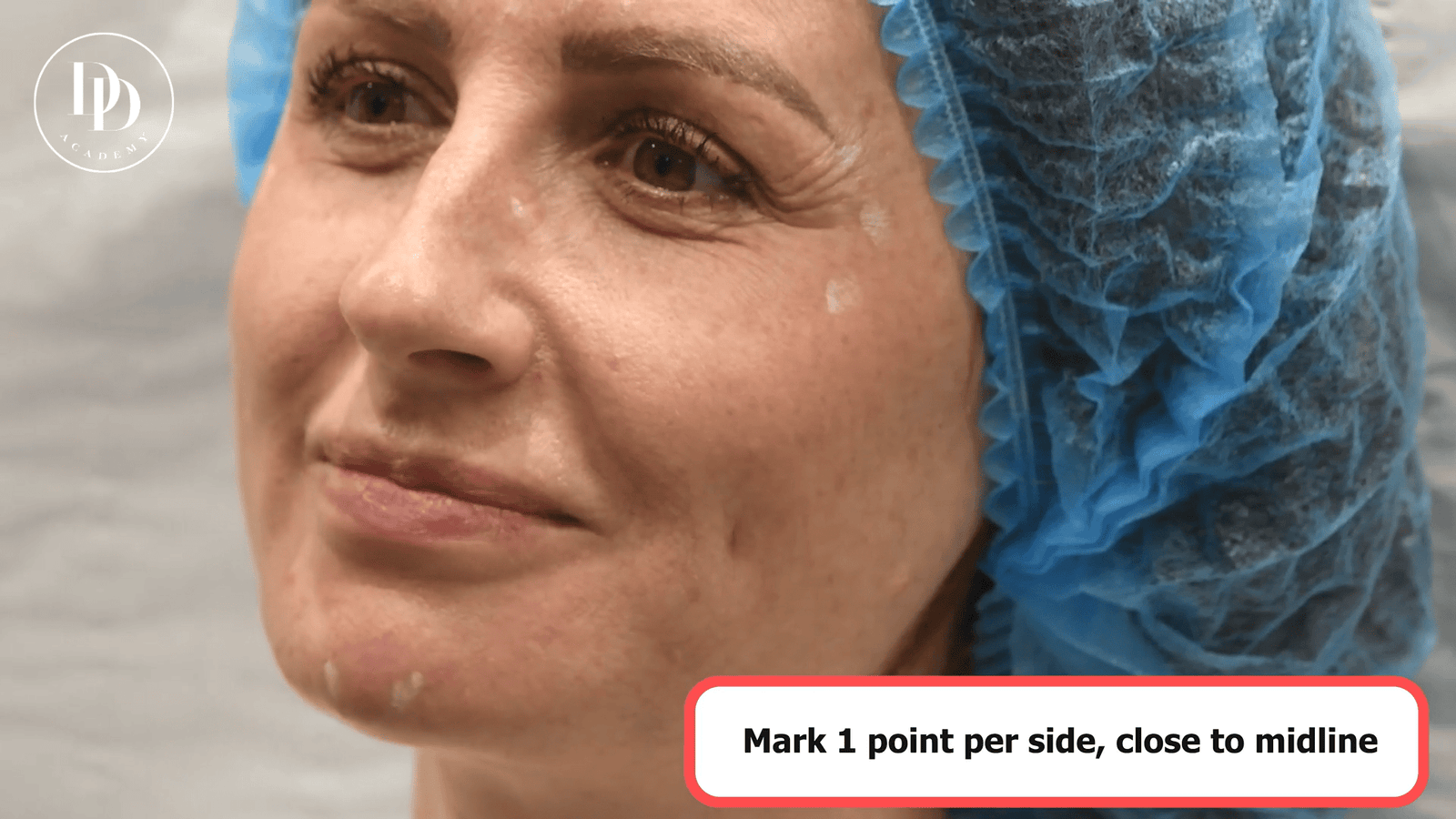
Chin botox injection points are typically delivered using either a 2-point or 4-point technique, depending on muscle strength and pattern of contraction.

In a 2-point approach, injections are placed approximately 0.5–1 cm lateral to the midline, targeting the central belly of the mentalis. This is best suited for patients with mild, centralised dimpling.

In a 4-point technique, a diamond pattern is created over the chin with two superior and two inferior points. This allows for more diffuse coverage in patients with broader or more pronounced mentalis activity.

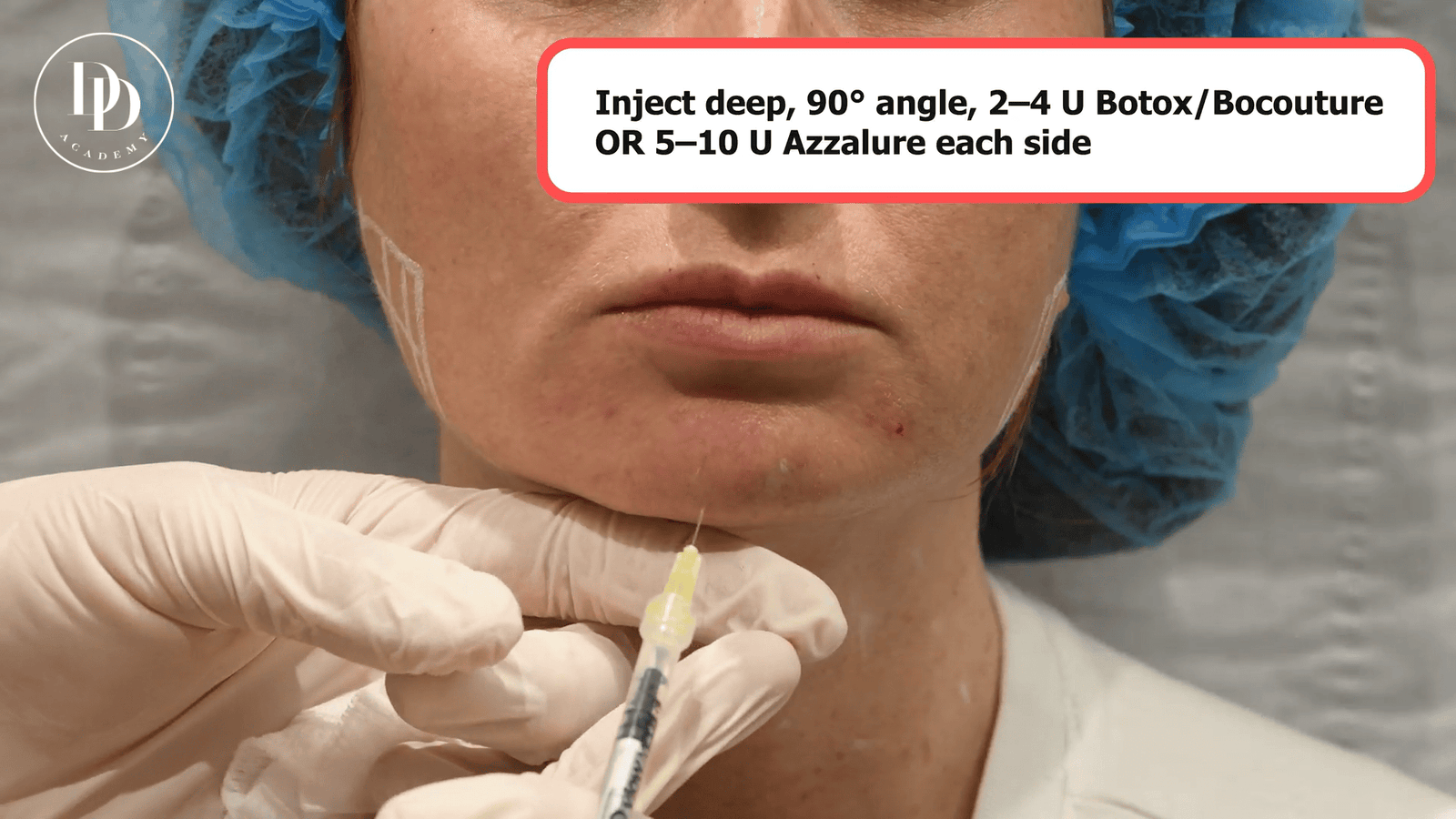
In both approaches, injection depth should remain superficial to mid-muscular, with careful angulation aligned to muscle fibres to reduce diffusion into adjacent depressor muscles.

chin botox injection points mentalis muscle mapping diagram showing 2-point and 4-point techniques

Why Train with Dr Dray Academy

At Dr Dray Academy, our training is designed to go beyond basic techniques — focusing on the clinical judgement, precision, and full-face understanding required to deliver natural, high-level results.

Our approach is built on over 45 years of experience treating some of the world’s most discerning patients, and these techniques are practiced daily across our London, Paris, and Abu Dhabi clinics.

Dosing, Safety and Clinical Decision-Making

Chin botox dosing is not standardised — it is guided by muscle strength, facial anatomy, and treatment history.

Typical ranges include 4–8 units for most female patients and 8–12 units for stronger male mentalis activity. However, conservative dosing is always recommended in first-time treatments, especially when combining with DAO or platysma injections.

Safety is a priority in this region due to the functional importance of perioral muscles. Over-treatment can lead to complications such as lower lip incompetence, speech difficulty, or smile asymmetry.

A structured follow-up at 2 weeks is essential to assess symmetry, function, and patient satisfaction before considering any adjustments.

chin botox dosing and lower face anatomy highlighting safe injection points and mental foramen location

Chin Botox Injection Technique and Lower Face Anatomy

Step-by-step clinical breakdown of chin botox injection points, including mentalis mapping, safety considerations, and dosing strategy for aesthetic practitioners.

Frequently Asked Questions

Become an Elite Aesthetic Practitioner

Get expert insights on aesthetic training, clinical techniques, and how to build a high-level practice. Join our private list for updates on upcoming training dates and opportunities.

Picture of Dr Dray Academy

Dr Dray Academy

Dr Dray Academy is a professional training platform dedicated to providing high-quality education in aesthetics and healthcare treatments. The content published is carefully created and reviewed to ensure accuracy, clarity, and real-world applicability.

Our team focuses on delivering expert guidance, training insights, and up-to-date industry knowledge to help students and professionals succeed in their careers. Each article is designed to be informative, trustworthy, and aligned with the latest standards in the field.

Discover our award winning Aesthetic Training in London here!

Related Blogs